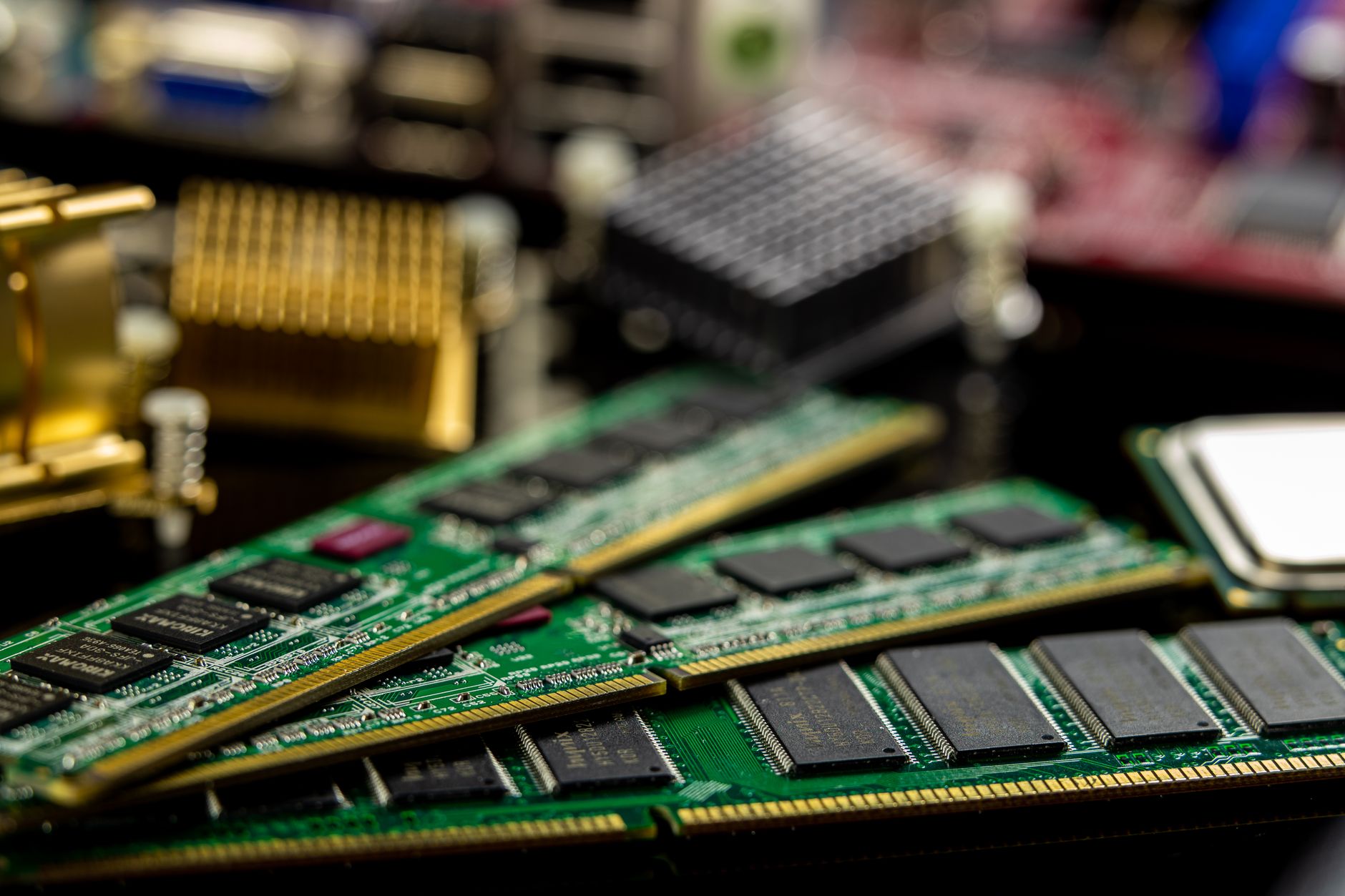
RDIMM vs. LRDIMM is an important distinction when selecting and upgrading DDR4 server memory. Both memory module types are used in professional server environments but differ in their internal architecture and the electrical load placed on the memory controller. While RDIMMs are a common solution for servers with different memory requirements, LRDIMMs were developed particularly for high memory capacities and extensive DIMM configurations.
Which technology is suitable depends on the supported server platform, the required RAM capacity, and the requirements of the applications. This comparison explains the technical differences, the effects on capacity and performance, and the most important compatibility rules when upgrading memory in existing servers.
RDIMM vs. LRDIMM: What Is the Technical Difference?
When comparing RDIMM vs. LRDIMM, the main technical difference lies in signal processing between the memory controller and the DRAM chips. RDIMM stands for Registered Dual Inline Memory Module, while LRDIMM stands for Load-Reduced Dual Inline Memory Module. Both module types use a registered memory architecture, but LRDIMMs also feature data buffers that reduce the electrical load on the memory controller.
RDIMM: Register for Command and Address Signals
An RDIMM contains a Registering Clock Driver (RCD) that processes command, address, and clock signals between the memory controller and the DRAM chips. The register reduces the load on the memory controller for these signals and improves signal integrity. However, the data path remains directly connected to the DRAM chips. The electrical load on the data lines therefore depends, among other factors, on the number of connected memory ranks and the module configuration. RDIMMs are used in enterprise servers, virtualization hosts, and data centers. They are suitable for different capacity requirements, provided the respective platform supports the module type and intended memory configuration.
LRDIMM: Additional Data Buffers to Reduce Electrical Load
An LRDIMM extends the registered architecture with additional data buffers. These electrically isolate the DRAM chips from the memory controller’s data bus, reducing the load caused by memory ranks. This load reduction enables the use of modules with many ranks and high memory density. As a result, compatible server platforms can achieve higher memory capacities without requiring the memory controller to drive all DRAM loads directly. LRDIMMs were therefore developed particularly for memory-intensive server configurations where maximum server RAM memory capacity and high DIMM density are essential.
RDIMM vs. LRDIMM: Direct Comparison
| Feature | RDIMM | LRDIMM |
|---|---|---|
| Designation | Registered DIMM | Load-Reduced DIMM |
| Register for command and address signals | Yes | Yes |
| Additional data buffers | No | Yes |
| Electrical load on the data bus | Depends on connected DRAM loads | Reduced by data buffers |
| Memory ranks | Depends on module type; often single-rank or dual-rank | Also available with high rank counts |
| Memory capacity | Depends on module and platform | Designed particularly for high memory density |
| Memory latency | Depends on module, timings, and platform | Also depends on module, buffer architecture, and platform |
| Typical use | General server and virtualization environments | Memory-intensive server configurations |
| DDR4 support | Yes | Yes |
| Mixed memory configurations | Do not mix with LRDIMM | Do not mix with RDIMM |
The direct RDIMM vs. LRDIMM comparison illustrates the fundamental architectural differences. However, whether a specific RDIMM or LRDIMM configuration achieves higher capacities or better performance can only be determined based on the supported modules and memory population rules of the respective server platform.
RDIMM vs. LRDIMM: What Are the Differences in Capacity and Performance?
When comparing RDIMM vs. LRDIMM, the decision should not be based solely on the module designation. The decisive factors are the maximum supported memory capacity, memory channel population, and the actual requirements of the applications.
Memory Capacity: When Does LRDIMM Offer Advantages?
The main advantage of LRDIMM is the reduced electrical load on the memory controller. This allows server platforms with appropriate support to use memory modules with many ranks and high capacities. The AMD EPYC 7003 series provides an example. According to AMD, this platform supports, among other configurations, DDR4 RDIMMs with one or two ranks and LRDIMMs with four or eight ranks. The supported total capacity also depends on the number of memory channels, DIMM slots, and modules used. LRDIMM is therefore particularly relevant when an existing DDR4 platform needs to be equipped with the highest possible RAM capacity. However, the LRDIMM architecture does not automatically mean that every LRDIMM has a higher capacity than every RDIMM.
Memory Latency: Is RDIMM Faster Than LRDIMM?
RDIMMs and LRDIMMs differ in their data paths. While RDIMMs connect the data lines directly to the DRAM chips, LRDIMMs use additional data buffers. These buffers change how signals are processed. However, this does not mean that RDIMMs always achieve lower memory latency or higher application performance in every server configuration. Actual performance is influenced by factors such as memory speed, timings, rank configuration, the number of DIMMs per channel, and the processor’s memory architecture. For a reliable performance assessment, specific memory configurations must therefore be compared on the same platform. Particularly in memory-intensive applications, greater available RAM capacity may be more important than a potential difference in memory latency.
Memory Bandwidth: Why Memory Channel Population Matters
A server’s memory bandwidth does not depend solely on the DIMM type used. The number of active memory channels and their population also play a significant role. On DDR4 server platforms with AMD EPYC or Intel Xeon processors, evenly populating the available memory channels can help maximize memory bandwidth utilization. When upgrading existing servers, it is therefore important to consider more than the capacity of individual memory modules. Equally important is how the planned configuration affects memory channels and the supported data transfer rate.
RDIMM or LRDIMM: Which Server Memory Is Suitable for Which Applications?
The RDIMM vs. LRDIMM comparison is particularly relevant for companies that want to upgrade existing DDR4 servers or adapt their memory configurations to changing requirements. Which technology is suitable depends on the existing hardware and the memory requirements of the respective applications.
RDIMM for General Server and Virtualization Environments
RDIMMs are a suitable choice when the required RAM capacity can be achieved using registered modules supported by the server platform. Typical use cases include virtualization hosts, database servers, and general enterprise applications. RDIMMs are also relevant when upgrading existing DDR4 servers, provided they are compatible with the installed memory architecture and manufacturer-approved configurations.
LRDIMM for Memory-Intensive Server Configurations
LRDIMMs are particularly relevant when a DDR4 server platform supports high memory densities and the required total capacity can be achieved with a suitable LRDIMM configuration. Potential use cases include large in-memory databases, memory-intensive analytics systems, and virtualization hosts with high RAM requirements. Whether LRDIMM actually offers a capacity advantage over RDIMM must be verified against the maximum supported memory configuration of the specific server.
RDIMM vs. LRDIMM: What Compatibility Rules Apply?
When comparing RDIMM vs. LRDIMM, memory compatibility is a decisive selection criterion. A module may physically fit into a DIMM slot without the server supporting its module type or memory configuration. Manufacturer compatibility specifications and memory population rules should therefore be checked before upgrading memory.
Can RDIMM and LRDIMM Be Mixed?
No. RDIMMs and LRDIMMs must not be used together in the same memory system unless the server platform explicitly supports such a mixed configuration. The different memory architectures require a uniform configuration approved by the manufacturer. Before upgrading memory, the memory population guidelines of the respective server manufacturer should therefore be checked.
Can RDIMM Be Replaced with LRDIMM?
Replacement is only possible if the server explicitly supports the LRDIMM module type. RDIMM support alone does not prove that LRDIMMs can also be used. Before replacement, it must be verified whether the server processor, server motherboard, firmware, and documented memory population rules support the intended LRDIMMs. A complete replacement of the existing memory modules may be necessary, as RDIMMs and LRDIMMs must not be operated together.
What Specifications Should Be Checked Before Purchasing?
For a compatible memory upgrade, the following points should be verified against the server documentation:
- Server model and processor: Which memory module types are supported?
- Memory generation: Does the system require DDR4 or another DDR generation?
- Module type: Are RDIMMs or LRDIMMs explicitly supported?
- Capacity and rank configuration: Which module capacities and rank organizations are permitted?
- Memory population: How many DIMMs can be installed per channel, and which data transfer rates are supported?
- Module approval: Is the specific part number included in the server manufacturer’s compatibility list or approved memory specifications?
A processor’s technical specifications alone are not always sufficient for selecting compatible memory. The memory population rules documented by the system manufacturer and the configurations validated for the respective server are also decisive.
RDIMM vs. LRDIMM: What Role Does DDR5 Play?
The direct comparison between RDIMM and LRDIMM is particularly relevant for existing DDR4 servers. While DDR5 RDIMMs are used in servers, LRDIMMs are not among the commonly supported memory types on current DDR5 server platforms. For companies operating existing DDR4 servers, however, the distinction remains important, for example when upgrading RAM, replacing defective modules, or purchasing compatible spare parts.
RDIMM or LRDIMM for Existing Servers?
The most important difference in the RDIMM vs. LRDIMM comparison lies in the memory architecture. RDIMMs use a register for command, address, and clock signals. LRDIMMs additionally reduce the electrical load on the memory controller through data buffers, enabling suitable configurations with high memory density. For existing DDR4 servers, RDIMM is a suitable choice when the required capacity falls within the supported registered memory configuration. LRDIMM is an option when a compatible platform requires particularly high memory capacities. A universal recommendation based solely on the module type is not possible. The decisive factors are the documented memory limits, population rules, and requirements of the respective applications.
Are you looking to upgrade your server memory or purchase compatible memory modules? Server-Hardware.com supports companies and system integrators in selecting suitable RDIMM and LRDIMM modules and purchasing professional servers.
Technical Sources:
Micron – RDIMM: How It Works and Differences Compared to LRDIMM

 Online Marketing Manager