A JBOD — “Just a Bunch of Disks” — is a disk enclosure architecture that exposes individual drives directly to a host system or external storage controller without performing hardware RAID operations. The key difference between JBOD and RAID lies in where the storage logic and redundancy are implemented. Unlike intelligent storage arrays with onboard RAID processors, a JBOD enclosure functions as a transparent expansion chassis: drives appear to the host as separate block devices, and all storage logic — pooling, redundancy, tiering — is handled by software or an external controller. This makes JBOD the most flexible and cost-effective option when intelligence belongs at the host layer rather than in the enclosure, particularly for software-defined storage platforms, hyperconverged infrastructure, and capacity-focused workloads where hardware RAID overhead is unnecessary.
IT infrastructure planners evaluating storage expansion face a recurring question: should the enclosure bring its own RAID logic, or should the host system control the drives? The answer depends on whether the workload benefits from hardware acceleration, whether the storage software expects direct disk access, and whether the architecture needs to scale capacity independently of compute resources. This article explains how JBOD differs from RAID arrays and other storage architectures, when direct disk presentation outweighs hardware RAID, and which deployment scenarios justify the additional host-side complexity.
JBOD and RAID: What Does JBOD Mean Architecturally?
JBOD is not a RAID level. It is an enclosure design philosophy: the chassis provides physical mounting, power distribution, cooling and SAS expander backplane connectivity, but no RAID controller. Each drive in the enclosure connects through a SAS expander to the host’s HBA (Host Bus Adapter), appearing as an individual device — /dev/sda, /dev/sdb, /dev/sdc on Linux, for example. The host operating system or storage software sees the raw drives and decides how to use them.
A hardware RAID controller, by contrast, aggregates drives into logical RAID volumes before the host sees them. A six-disk RAID 6 array might appear to the OS as a single 20 TB volume; the controller handles parity calculation, write buffering, cache management and rebuild operations transparently. JBOD shifts all of that responsibility to software. If redundancy is needed, the host must implement it — through Linux mdadm, ZFS, Windows Storage Spaces, VMware vSAN, or a distributed storage layer like Ceph or GlusterFS.
The architectural difference matters most when the storage software expects direct device access. ZFS, for instance, manages its own redundancy, checksumming and copy-on-write behaviour; placing a hardware RAID layer underneath ZFS limits its direct visibility into individual drives and failure conditions. Software-defined storage platforms similarly assume they control the disks: inserting a RAID controller between the software and the drives forces double buffering, introduces opaque failure modes, and prevents the storage layer from making intelligent placement decisions based on individual drive health or performance.
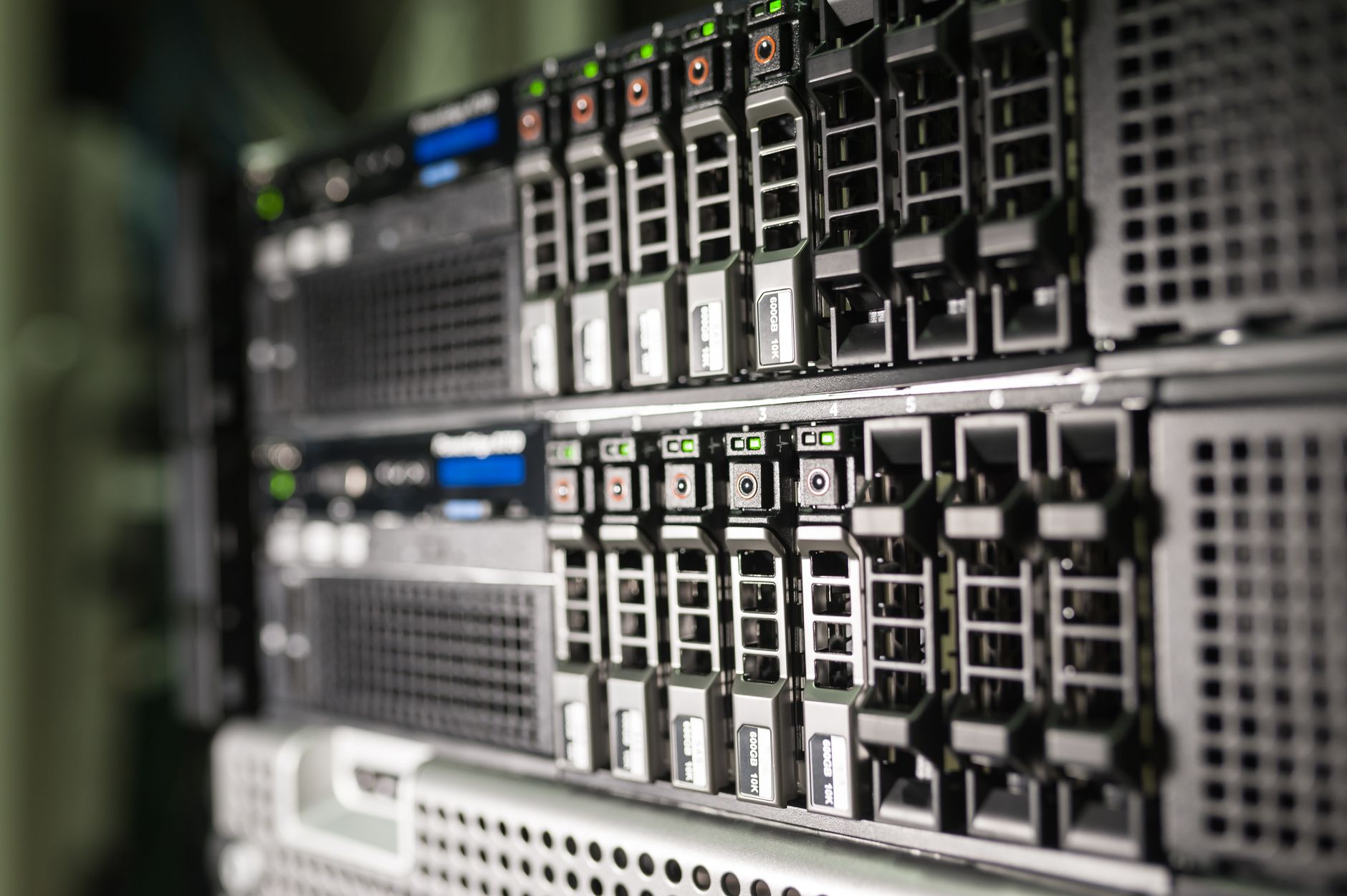
JBOD enclosures typically use SAS expanders to fan out connectivity from one or two external SAS ports to 12, 24, 45 or 60 internal drive bays. A dual-controller JBOD allows two separate hosts or HBAs to access the same drives simultaneously for failover; each controller has its own SAS path to the expander backplane, and the host software handles path selection and failover logic. This multipathing capability is essential for high-availability storage clusters where a single host failure must not block access to the disks.
JBOD vs RAID Arrays: When Direct Disk Access Beats Hardware RAID
Hardware RAID arrays and JBOD enclosures solve different problems. A RAID controller offloads redundancy calculations from the host CPU, provides battery-backed write cache for transactional workloads, and presents a simplified storage view to the operating system. JBOD provides maximum flexibility: the host software can stripe, mirror or leave drives independent; change the redundancy scheme without hardware constraints; and add or remove capacity drive by drive.
Hardware RAID is appropriate when the host OS or application is RAID-unaware, when predictable write latency depends on battery-backed cache, or when boot-from-SAN requires controller-managed LUNs. A database server running on bare metal with direct-attached storage benefits from a RAID controller’s ability to absorb random write bursts into cache and destage them sequentially during idle periods. The controller’s XOR engine accelerates RAID 5 or RAID 6 parity calculation, reducing CPU overhead.
JBOD is appropriate when the storage software expects raw devices, when capacity must scale independently of redundancy overhead, or when the workload is read-heavy enough that write cache acceleration is unnecessary. A media streaming server storing 4K video files does not need sub-millisecond write latency; it needs maximum usable capacity per rack unit. ZFS or Ceph can manage that capacity more efficiently than a hardware RAID controller because they understand the data layout and can optimise placement and rebuild operations at the application layer.
Software-defined storage platforms — VMware vSAN, Nutanix, Microsoft Storage Spaces Direct, Red Hat Ceph Storage — frequently rely on JBOD or direct drive access instead of hardware RAID. These platforms implement their own redundancy across multiple nodes; inserting a RAID controller in each node forces the software to protect data that is already protected by the enclosure, wasting capacity and complicating failure recovery. JBOD allows the software to see drive failures directly, redistribute data to other nodes, and retire a failed disk without waiting for an enclosure rebuild cycle.
Object storage systems follow the same logic. An object store with erasure coding across 12 storage nodes does not need each node to run hardware RAID 6; the distributed erasure code provides redundancy more efficiently. JBOD enclosures in each node expose the drives directly, and the object store’s placement algorithm stripes data across nodes and drives according to its own durability target. A single drive failure is repaired by re-encoding the object from other nodes, not by rebuilding a local RAID set.
JBOD vs DAS, NAS and SAN: Where JBOD Fits in the Storage Hierarchy
JBOD is a form of directly attached storage (DAS): the enclosure connects point-to-point to a host via SAS cables rather than over a shared network. Unlike NAS Storage (Network-Attached Storage) or SAN Storage (Storage Area Network), a JBOD has no network-facing protocols — no NFS, SMB, iSCSI or Fibre Channel target capability. The host’s HBA must be physically cabled to the JBOD, and only systems with a direct SAS connection can access the drives.
This architectural simplicity is both a limitation and a strength. JBOD cannot serve storage to dozens of independent clients the way a NAS appliance can; it is bound to the host it connects to. But JBOD also avoids the protocol overhead, network latency and complexity of shared storage. A single-host workload — a video editing workstation, a backup server, a hyperconverged node — often performs better with local SAS-attached JBOD than with iSCSI or NFS mounts traversing a 10 GbE network, because the I/O path is shorter and the host has complete visibility into drive health and performance.
JBOD is frequently used as backend expansion for SAN and NAS systems. A storage controller running TrueNAS, OpenMediaVault or a commercial NAS OS connects to JBOD enclosures via SAS HBAs and exports the pooled capacity over the network as NFS or SMB shares. The JBOD provides the raw capacity; the controller provides the network intelligence, caching, snapshot management and multi-client access. This separation allows capacity to scale independently: additional JBOD shelves can be added without replacing the controller, as long as the HBA and SAS topology support the added drive count.
When Is JBOD instead of RAID the Right Storage Architecture?
JBODs are the right choice when storage intelligence belongs at the software layer, when capacity must scale flexibly, or when the workload does not justify the cost and complexity of a hardware RAID controller. Several deployment patterns make JBOD architecturally superior to intelligent arrays:
Software-defined storage platforms depend on direct disk access. VMware vSAN, Ceph and similar systems assume they control drive layout, manage metadata, and handle failures at the cluster level. A hardware RAID controller between the software and the drives hides failures from the cluster, prevents fine-grained capacity management, and forces double write amplification. JBOD allows the software to see every drive, place replicas intelligently, and manage capacity across nodes without enclosure-level constraints.
Cold storage and archival tiers prioritise usable capacity over performance. A 4U JBOD housing 60 large-capacity SATA drives delivers the highest TB-per-rack-unit. The workload — backup targets, video archives, compliance retention — is write-once, read-rarely; the value lies in capacity, not in cache-accelerated random I/O. Hardware RAID overhead (dual parity, hot spare reservation) reduces usable capacity; JBOD with software RAID 6 or erasure coding can provide the required redundancy at the software level.
Media production and post-production environments handle massive sequential files that overwhelm hardware RAID cache. A 4K or 8K video editing workstation streaming multiple uncompressed timelines benefits more from aggregate drive bandwidth than from a RAID controller’s 4 GB cache. JBOD with software RAID 0 across NVMe or SAS SSDs delivers higher sequential throughput than most hardware RAID controllers, and the workstation’s own RAM serves as effective read cache.
Hyperconverged infrastructure nodes combine compute and storage in the same chassis. Each node runs application VMs on local CPU and GPU resources and contributes its local drives to a distributed storage pool. JBOD allows the hyperconverged software (Nutanix AHV, VMware vSAN, Cisco HyperFlex) to manage the drives directly; a hardware RAID controller per node adds cost without adding value, because redundancy is already guaranteed by the distributed architecture.
Test and development clusters need flexible, low-cost capacity that can be reconfigured quickly. JBOD allows individual drives to be assigned to different VMs, repartitioned for new test cases, or replaced without rebuilding an entire RAID set. A development Kubernetes cluster might use JBOD with local PersistentVolumes managed by a CSI driver, avoiding the cost of enterprise SAN infrastructure for ephemeral workloads.
The pattern is consistent: JBOD is the right architecture when the host software is sophisticated enough to manage drives itself, when capacity economics outweigh performance acceleration, or when the deployment model distributes redundancy across nodes rather than concentrating it in each enclosure. For traditional enterprise workloads where the OS and application expect a single block device with predictable latency, hardware RAID remains appropriate.
JBOD Limitations and Trade-Offs Compared to RAID
JBOD’s architectural simplicity comes with responsibilities that hardware RAID controllers handle automatically. Recognising these trade-offs helps decide whether JBOD fits a given deployment:
No enclosure-level redundancy. A drive failure in a JBOD is just a drive failure; the enclosure does not protect adjacent drives or begin rebuilding data on a hot spare. If the host software does not implement RAID or replication, the data on the failed drive is lost. Contrast this with a RAID controller, which can fail over to a hot spare and begin rebuild immediately, often without the host OS noticing the failure until rebuild completes.
Host dependency for all storage logic. JBOD pushes parity calculation, write buffering, rebuild I/O and health monitoring onto the host CPU and storage software. A server running ZFS RAID-Z2 across 20 drives in a JBOD spends CPU cycles on parity calculation that a RAID controller would offload. This matters less on modern EPYC or Xeon platforms with AES-NI acceleration and high core counts, but it still represents measurable overhead on CPU-constrained systems.
Limited write acceleration. Hardware RAID controllers with battery-backed cache can acknowledge writes immediately and destage them to disk asynchronously, reducing write latency for transactional workloads. JBOD has no write cache; every write must complete on the physical drive before acknowledgment. Software RAID on JBOD can use host RAM as write-back cache, but a power failure without a UPS risks data loss unless the host has persistent memory or a similar battery-backed solution.
Complexity of multipathing and failover. Dual-controller JBOD deployments require the host to manage path failover, detect path failures, and redistribute I/O correctly. Misconfigured multipath setups cause data corruption; path thrashing under high load causes performance instability. A hardware RAID controller with active-active firmware handles this internally and presents a single, stable device to the host.
Rebuild load on host resources. When a drive fails in a JBOD-backed ZFS pool or Ceph cluster, the rebuild process consumes host CPU, memory and I/O bandwidth. A hardware RAID rebuild runs on the controller’s dedicated processor, but can still compete with application I/O for available storage resources. For latency-sensitive production systems, this can matter: a RAID controller can throttle rebuild I/O to protect foreground performance, whereas software RAID may require manual tuning to avoid starving applications during rebuild.
These limitations are not inherent flaws; they are trade-offs. JBOD gives you flexibility, transparency and cost savings at the expense of self-sufficiency. If the host software is capable and the workload tolerates the added responsibility, JBOD delivers better economics and better scalability than intelligent arrays. If the deployment needs hands-off operation, predictable latency regardless of failures, or compatibility with storage-unaware operating systems, hardware RAID remains the safer choice.
Size JBOD Capacity and Redundancy According to the Workload
Sizing a JBOD deployment requires balancing aggregate throughput, redundancy overhead, rebuild time, power draw and the host’s ability to manage the resulting storage pool. A 60-drive JBOD sounds like maximum efficiency, but if the host CPU cannot keep up with rebuild I/O or the workload does not need 1 PB of raw capacity, a smaller enclosure with denser drives or faster media often performs better.
For capacity-focused deployments — backup targets, video archives, log retention — the calculation centres on usable TB after redundancy. A 45-bay JBOD with 20 TB SATA drives yields 900 TB raw; with RAID 6 (double parity), usable capacity is approximately 860 TB. That rebuild takes 24–48 hours on 7200 RPM HDDs; during that window, a second drive failure completely exhausts the remaining drive redundancy. Splitting the pool into smaller RAID-Z2 vdevs — three 15-drive vdevs rather than one 45-drive stripe — reduces the blast radius and shortens rebuild time at the cost of slightly lower usable capacity.
For performance-focused deployments — databases, virtualisation, software-defined storage nodes — the sizing constraint is IOPS and throughput rather than capacity. A 24-bay 2U JBOD with SAS or NVMe SSDs delivers higher aggregate IOPS than a hardware RAID controller with cache because every drive’s IOPS contribute directly to the pool. Sizing depends on the workload’s read/write ratio, the storage software’s metadata overhead, and the host’s ability to drive sufficient queue depth across all drives simultaneously. Underpowered HBAs or insufficient CPU cores bottleneck the I/O path before the drives do.
Dual-controller JBOD enclosures are sized assuming multipathing and failover requirements. Both SAS links must have sufficient bandwidth to handle normal traffic plus the failover load if one path drops. A 24-drive JBOD with 12 Gbit/s SAS uplinks must provide sufficient uplink bandwidth for normal traffic and failover load; if the workload normally pushes 1800 MB/s total, both paths must be active simultaneously, and the host’s multipathing driver must balance traffic rather than keeping one path idle.
At server-hardware.com, JBOD deployments range from compact 2U 12-bay Supermicro JBOD enclosures for departmental backup servers to high-density 4U 60-bay Seagate JBOD shelves for multi-petabyte storage clusters. The choice depends on whether capacity, density, redundancy or performance dominates the sizing constraint, and whether the host infrastructure — CPU, RAM, HBA, storage software — can manage the resulting pool without becoming the bottleneck. Quotations for JBOD-based storage projects include matching HBAs, SAS cabling, and confirmation that the host platform can drive the planned configuration; compatibility questions are answered directly before purchase to avoid integration failures after deployment.
JBOD or RAID: The Decision Depends on Where Intelligence Should Live
JBOD succeeds when storage intelligence belongs at the software layer — in ZFS, in Ceph, in a hyperconverged platform, in an object store — rather than in the enclosure. A JBOD enclosure is deliberately unintelligent: it provides physical infrastructure (bays, power, cooling, SAS switching), and nothing more. That simplicity becomes a strength when the host or the distributed system has better visibility into the workload, better redundancy algorithms, and better placement logic than any single enclosure could provide.
The architectural question is whether the host is capable of managing that responsibility. A single server running software RAID must handle rebuild I/O, path failover and health monitoring without a controller’s built-in automation. A hyperconverged cluster distributes that complexity across multiple nodes, reducing the per-node burden but requiring more sophisticated storage software. A hardware RAID controller offloads all of it but locks you into the controller’s capabilities, its cache size, its RAID level support, and its firmware lifecycle.
JBOD is not a default choice; it is a deliberate one. It fits software-defined storage, scale-out architectures, and capacity-optimised workloads where the host or cluster has the expertise and the resources to manage drives directly. For those deployments, JBOD delivers the lowest cost per TB, the highest configuration flexibility, and the cleanest integration with modern storage platforms that expect raw block devices rather than pre-processed LUNs.

 Online Marketing Manager